 One of oneView rug
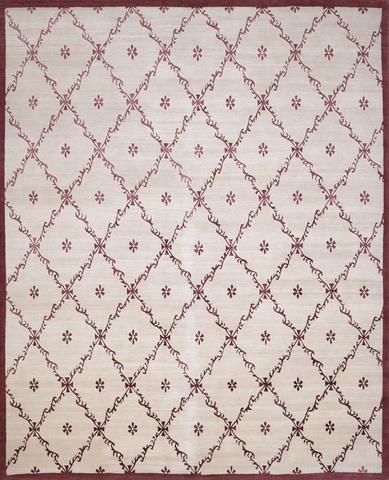
Trellis Ivory & Red W & S
No. 16371 · 8′0″ × 9′11″
Price on request
Enquire →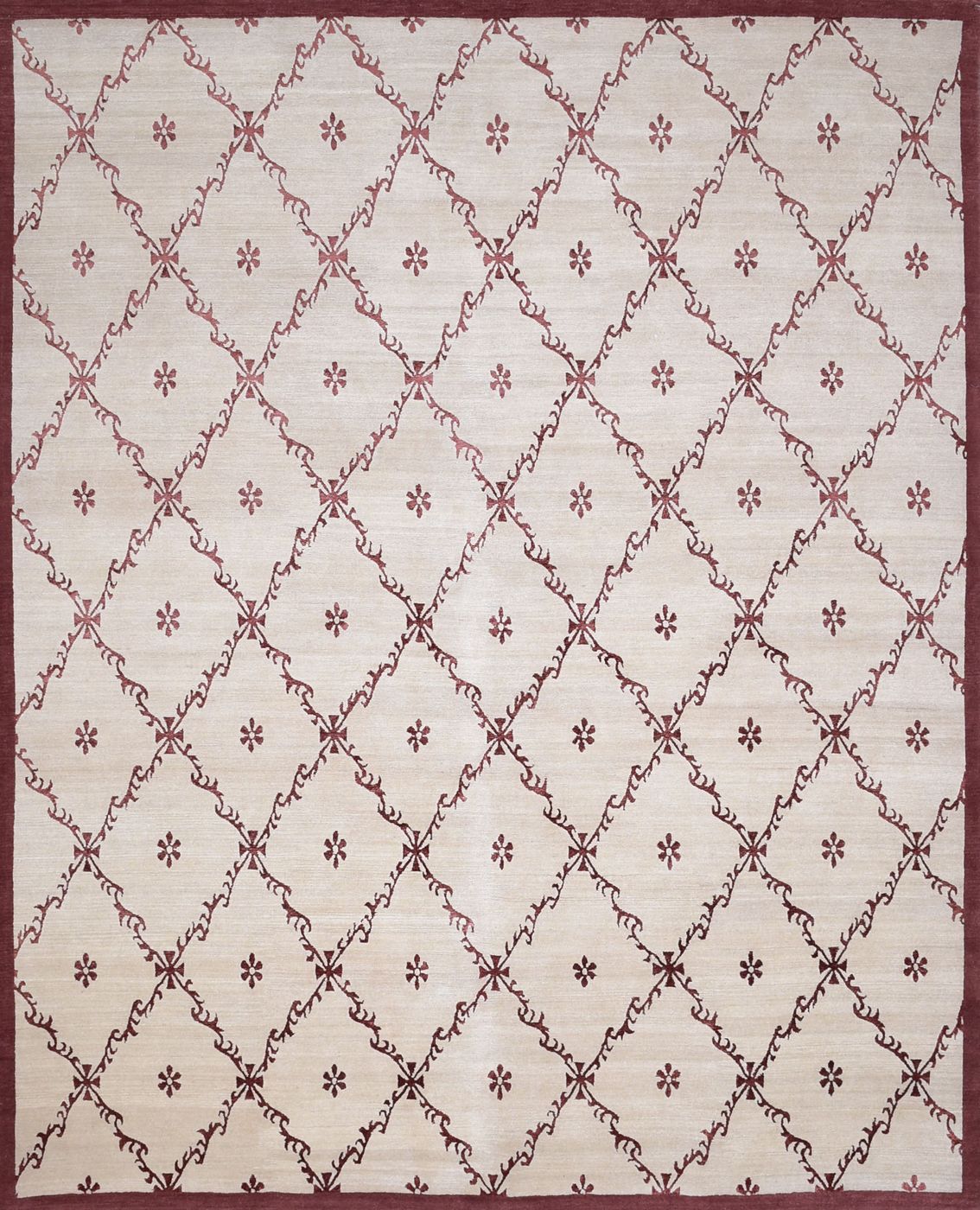
Buying guide · How rugs are made
The Tibetan weave is a hand-knotting technique of its own, used for centuries in Tibet and today for many of the finest modern and transitional rugs woven in Nepal.
Instead of tying separate knots, the weaver loops the yarn continuously around the warp threads and over a horizontal rod laid across the loom. When a row is done, the loops along the rod are cut, forming the pile. The result is a dense, even pile with a slightly different texture from a Persian or Turkish knot.
The technique suits large areas of clear colour, soft gradients and painterly designs, which is why so many contemporary and transitional rugs are made this way. It is often combined with highland wool and silk highlights.
Living rooms, bedrooms and dining rooms. A Tibetan-weave rug in wool is durable and comfortable underfoot; with silk details it is best in rooms with lighter traffic.
On the floor now
One of oneView rugNo. 16371 · 8′0″ × 9′11″
Price on request
Enquire →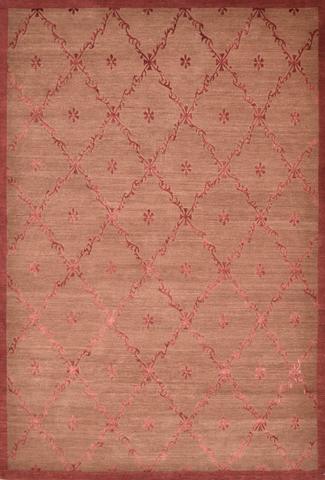 One of oneView rug
No. 16372 · 6′1″ × 8′10″
Price on request
Enquire →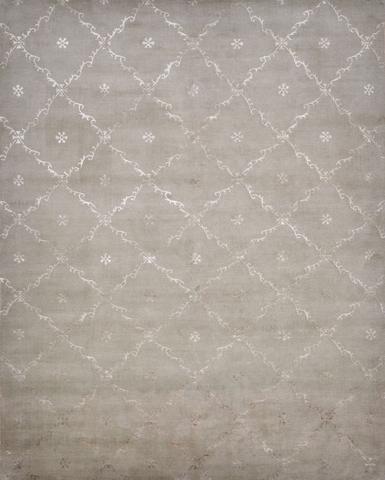 One of oneView rug
No. 16530 · 7′10″ × 9′10″
Price on request
Enquire →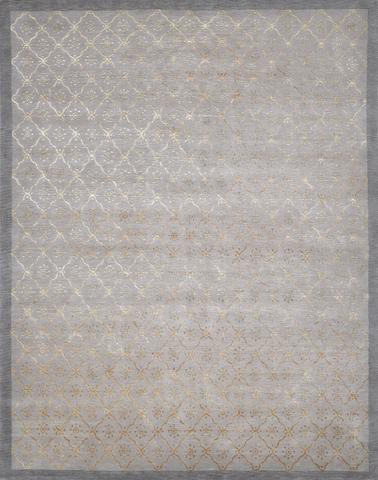 One of oneView rug
No. 16970 · 8′0″ × 10′0″
Price on request
Enquire →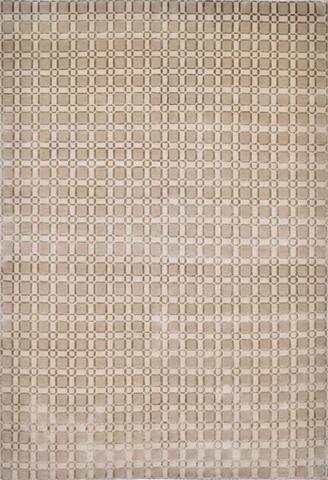 One of oneView rug
No. 14119 · 6′0″ × 8′9″
Price on request
Enquire →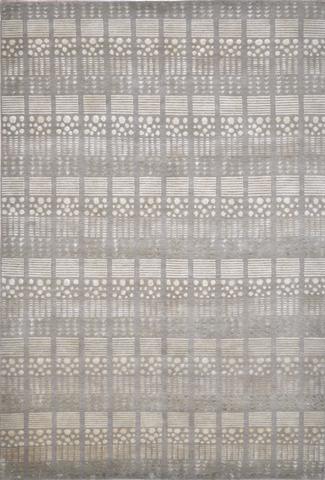 ClearanceView rug
No. 14120 · 6′0″ × 8′10″
$1,997.50 $3,995
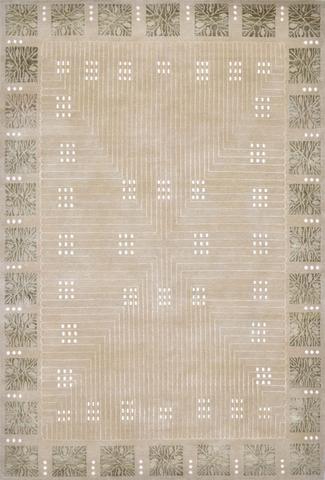 ClearanceView rug
No. 14426 · 6′0″ × 8′11″
$1,797.50 $3,595
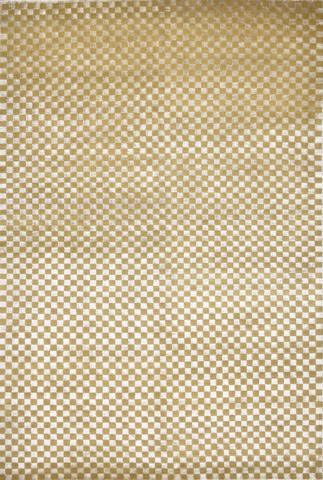 ClearanceView rug
No. 14431 · 6′0″ × 9′0″
$1,997.50 $3,995
Questions
Yes. It is hand knotted, using the Tibetan looping technique rather than separate Persian or Turkish knots.
How rugs are made
Or go back to the full buying guide for sizes, quality and care.
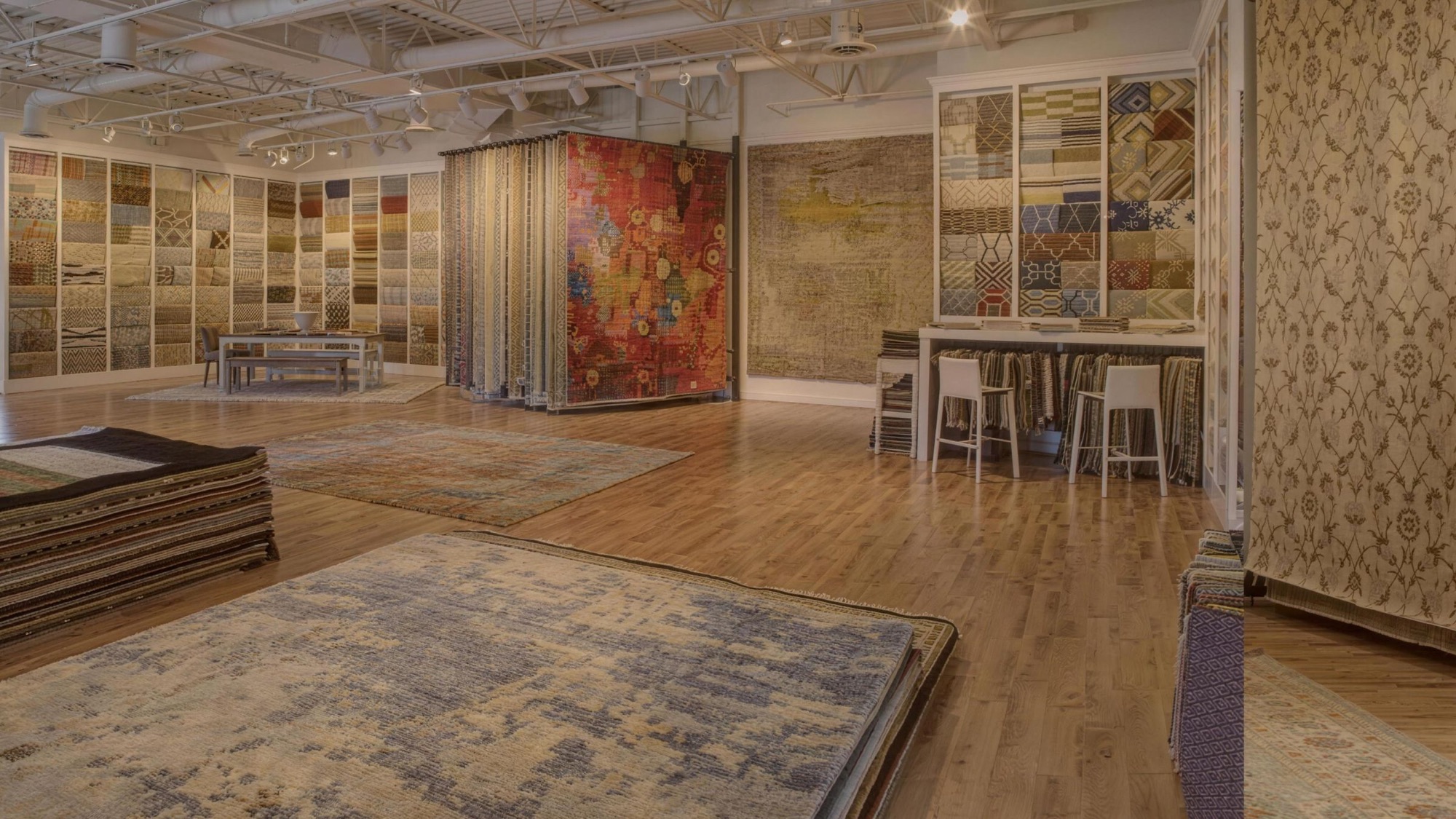
Timonium & Maple Lawn
Walk the floor, feel the pile, and take the one you love home on approval.
Opening hours & directions