November 28, 2026 · 5 min read
How to Hang a Rug on the Wall Without Damaging It
Learn how to hang a rug on the wall without stressing its fringe or weave, and what to do if it gets damaged over time. Call or visit a showroom.
Can you really hang a rug on a wall?
Yes. It's a common way to display a hand-knotted rug, especially a smaller or more decorative piece that doesn't get foot traffic. The main thing to get right isn't whether you can do it, but how. A rug is built to lie flat and carry weight evenly across its whole surface. Hang it badly and you put all that weight on a few inches of weave instead, which is where problems start. Done carefully, with a method that spreads the load and leaves the rug free to hang naturally, it's a good way to treat a rug like a piece of art rather than a floor covering.
What the fringe is, and why it matters when you hang a rug
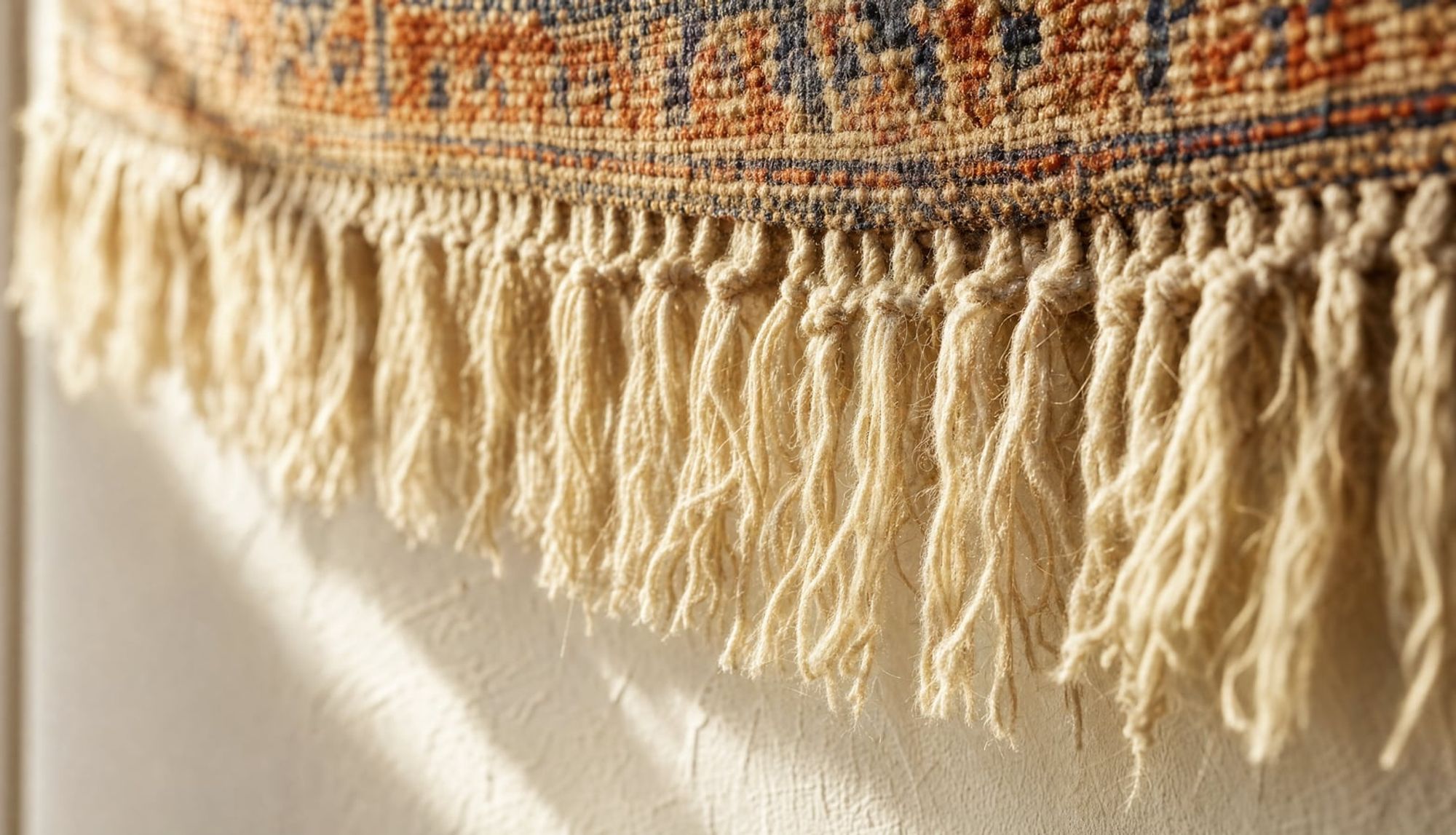
The fringe at each end of a hand-knotted rug isn't a separate trim sewn on afterward. It's the exposed ends of the warp threads, the lengthwise threads the whole rug is woven around. Cut or damage the fringe and you're affecting the structure the rug is built on, not just the decoration.
That's why the fringe needs to hang free when a rug is mounted on a wall. Pinning it flat, gluing it down, or trapping it behind a frame puts steady tension on threads that were never meant to carry weight. Over months, that tension pulls at the knots nearest the edge and can fray or loosen the fringe faster than ordinary handling would.
Picking a rug that's suited to hanging
Not every rug in a home is a good candidate for the wall. Lighter, flatter weaves hang more evenly and show their pattern well from a distance, which is part of why flatweave rugs and finer traditional pieces are popular choices for display. A rug with a thick, dense pile is heavier for its size and tends to hang with a slight curve or sag unless it's well supported, which changes how the pattern reads. Fine silk rugs show their sheen differently on a wall than on the floor, which is part of their appeal for display.
Size and weight matter too. A small or medium rug is manageable for most walls and most hanging methods. A large area rug, the kind meant to anchor a living room floor, is heavy enough that the wall, the fasteners, and the method all need to be able to carry that weight without strain, both on the wall and on the rug itself.
Ways to hang a rug without nails or tacks
A few methods are common for mounting a rug without putting holes through the weave itself:
- Rug sleeves are a fabric channel sewn along the top back edge of the rug, into which a rod or slat is inserted. The rug then hangs from the rod much like a curtain, with its weight carried along the whole top edge rather than at a few points.
- Hook-and-loop strips are sewn or attached along the top edge, with the matching strip fixed to a wood batten on the wall. This spreads weight evenly too, and is popular because it's low-profile and keeps the rug flat.
- Clamps, usually a pair of flat metal or wood bars that grip the top edge of the rug like a long clip, then hang from hooks or a rail. These are simple and don't require any sewing, but they concentrate weight along the clamped strip, so they suit lighter rugs better than heavy ones.
Each method keeps the body of the rug intact; none of them should ever involve nails, tacks, or adhesive through the weave or the fringe.
What actually holds a rug in place long-term
Whatever method you choose, the hanging point needs to be anchored into something solid, not just drywall. A rug of any real size and weight can pull loose from a wall anchor over time, however carefully it was installed to begin with. Finding the studs behind the wall and fixing the batten, rail, or hooks into them is what keeps a rug level and secure for years rather than months.
It's also worth balancing the look you want against the practical limit of the method. A rug that's going to hang for a long time benefits from a mounting point that supports its full width, not just the two top corners, so the weight is spread rather than concentrated.
If the fringe or edge gets damaged
If a fringe does fray, pull, or come loose after hanging, it isn't necessarily the end of the rug. Washing, re-fringing and restoration are done in house, and that kind of rug repair work is exactly what it's for: bringing a damaged edge back rather than retiring the rug. If you notice wear starting at the top edge, it's worth having it looked at before it spreads further into the weave.
Live with it before you commit
Before you commit to a hanging method, or even to hanging a particular rug at all, it helps to see the piece in your own space. You can take it home on approval and see it in your own light, with your own furniture, before you decide, whether you're weighing the floor against the wall or just deciding where a rug will look right. That home trial is a good time to think through scale, weight, and placement before any hardware goes into the wall.
If you're choosing between pieces for a wall display, the rug buying guide covers sizing and material questions worth sorting out first. You can see pieces in person at either showroom location, or call the Timonium showroom at (410) 308-3770 to ask about trying a specific rug at home.