November 29, 2026 · 4 min read
Do You Need a Rug Pad? Choosing One for Hardwood, Tile and Stairs
Do you need a rug pad on hardwood, tile or stairs? What a pad does, thin vs thick, and why a pad cut to your rug fits better. Call or visit a showroom.
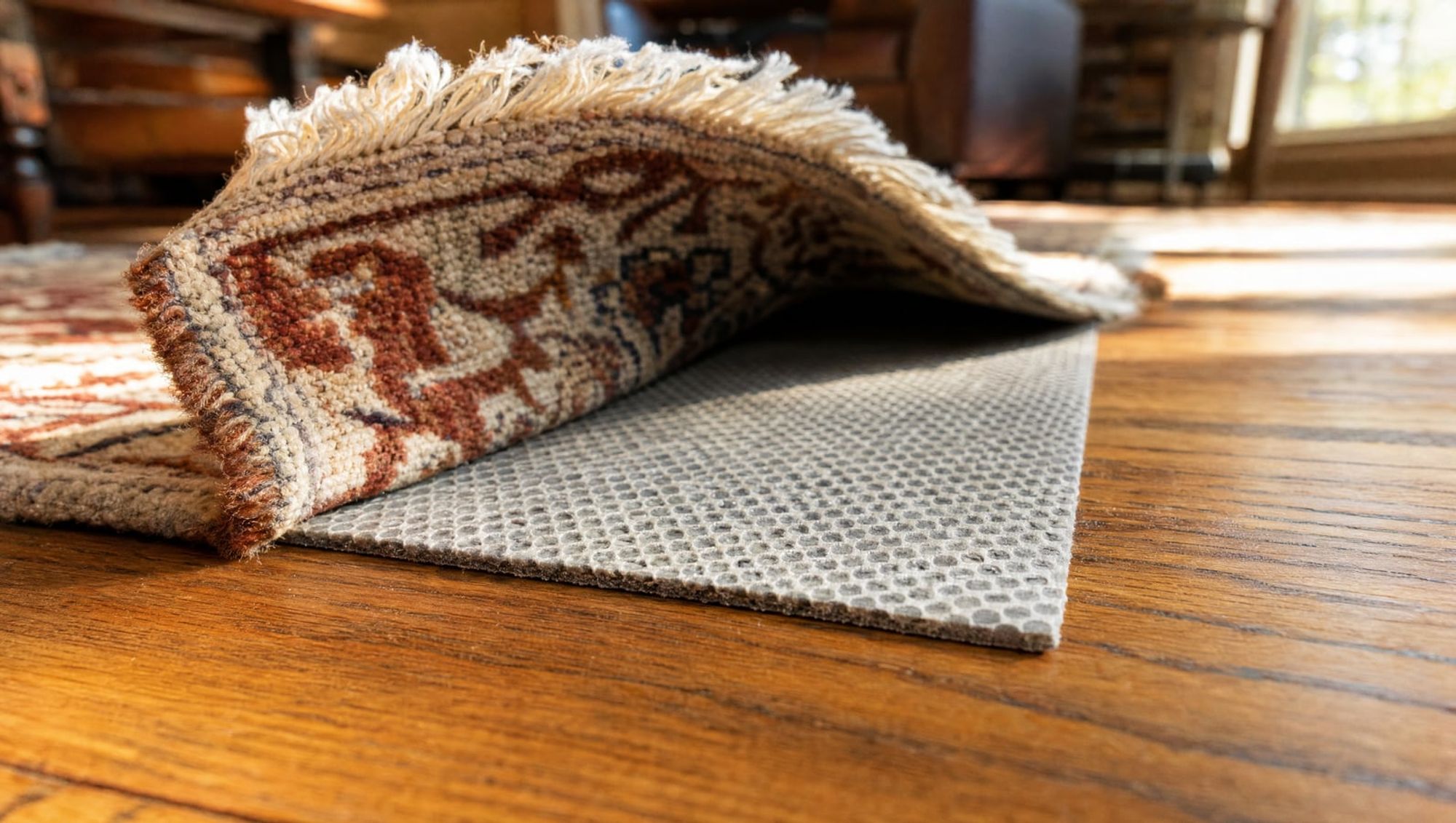
If you've just bought a rug, or you're about to, it's worth figuring out whether you need a rug pad underneath it before you get it home. The answer depends less on the rug and more on the floor it's going on, and on whether it's lying flat or wrapped around stair treads.
What a rug pad actually does
A rug sitting directly on a hard floor has nothing holding it in place except its own weight. Foot traffic pushes it, furniture legs drag on it, and over time the backing wears against the floor and the floor wears against the backing. A pad sits between the two, taking that friction instead of the rug, and keeps the rug from creeping out of position every time someone walks across it.
Do you need one on hardwood?
On hardwood, the two worries people usually bring up are the rug sliding and the floor getting scratched. Both come from the same thing: a rug moving against a hard, finished surface. A pad underneath addresses the movement itself, which is the root of both problems.
Do you need one on tile?
Tile raises similar questions, mostly around grip and comfort. A rug on tile with nothing underneath it can shift the same way it does on hardwood, and without any cushioning, it can feel thin and hard underfoot compared with the floor around it. A pad changes that feel and keeps the rug settled where you put it.
What to use on stairs
Stairs are a different problem from a flat rug in a living room. A runner or stair carpet has to stay in place on an edge, not just a flat surface, and it takes a different kind of wear with every step. If you're planning to run a rug up a staircase, ask specifically about stair runners rather than assuming a flat-floor pad will do the same job.
Why rug pads aren't all the same price
It's a fair question when you see pads priced all over the map: a pad cut precisely to an odd-sized rug, in whatever material and thickness suits that floor, is a different product from a generic rectangle off a shelf. Size, thickness and the floor it's going under all play into it, even before you get into which pad actually suits your rug.
Store-bought pads vs. a pad cut to your rug
A pad bought off a shelf at a home store comes in standard sizes, and a rug rarely lines up with one of them exactly. You end up trimming it yourself, or living with an edge that doesn't quite reach, or a pad that's bigger than the rug and peeks out from underneath. At Senneh Knot, padding is cut to the rug so it stays put, which means the fit is exact rather than approximate.
Choosing between a thin and a thick pad
As a general rule, the right thickness depends on where the rug sits and what's around it. A rug that has to sit flush under a door, or tuck neatly under furniture, usually wants something thinner. A rug in open floor space, where comfort underfoot matters more than clearance, has more room for something thicker. The right call for your rug depends on your specific floor and how the rug is placed, so it's worth talking through with someone who can look at the room.
Getting a pad cut to your rug
If you want a pad sized to your actual rug rather than a generic one, see rug pads cut to size, then bring the rug's dimensions in, or bring the rug itself if you can. Visit the Timonium showroom to look at options in person, or book a home trial first if you're still deciding on the rug itself. The rug buying guide covers the rest of what to think about before you buy. You can also call (410) 308-3770 to ask questions before you come in.