November 8, 2026 · 2 min read
Persian and oriental rugs: what is the difference?
Persian and oriental get used as if they mean the same thing. They do not, quite. Here is the difference, and whether it matters.
The short answer
Every Persian rug is an oriental rug, but not every oriental rug is Persian.
Oriental is the broad word. It covers handmade rugs from a wide stretch of Asia, including Iran, Turkey, Afghanistan, Pakistan, India, China and the Caucasus. Persian is the narrower one. It means a rug made in Iran, which was known as Persia.
Where the name comes from
A Persian rug is defined by where it was woven, and many are named for the city or region they come from. Tabriz, Kashan, Heriz and Isfahan are all places as well as styles.
That is also where we get our own name. Senneh is the old name of the Kurdish city of Sanandaj in western Iran, and it gave its name to the Senneh knot.
The knot is a clue, not a proof
Weavers across the rug-making world use two main knots. The Turkish or Ghiordes knot is symmetrical. The Persian or Senneh knot is asymmetrical, and our guide to hand-knotted rugs shows how each one is tied.
The names can mislead. Plenty of rugs woven in Iran use the Turkish knot, and rugs from outside Iran use the Persian one. A knot tells you how a rug was tied, not where.
How the designs tend to differ
These are tendencies, and there are many exceptions.
- City workshop rugs often have fine, curving floral designs and a central medallion.
- Tribal and village rugs tend to be bolder and more geometric, drawn from memory and tradition instead of a written plan.
- Rugs from different regions can share a design name while looking quite different, because a pattern travels and every weaving community makes it its own.
Does the difference matter when you buy?
It matters if you are looking for a specific origin, and a seller should be able to tell you where a rug was made. Beyond that, we would put quality and the way a rug looks in your room ahead of the label.
Materials, knot density, the condition of the rug and how the colours sit together all say more about a rug than one word on a tag.
See them side by side
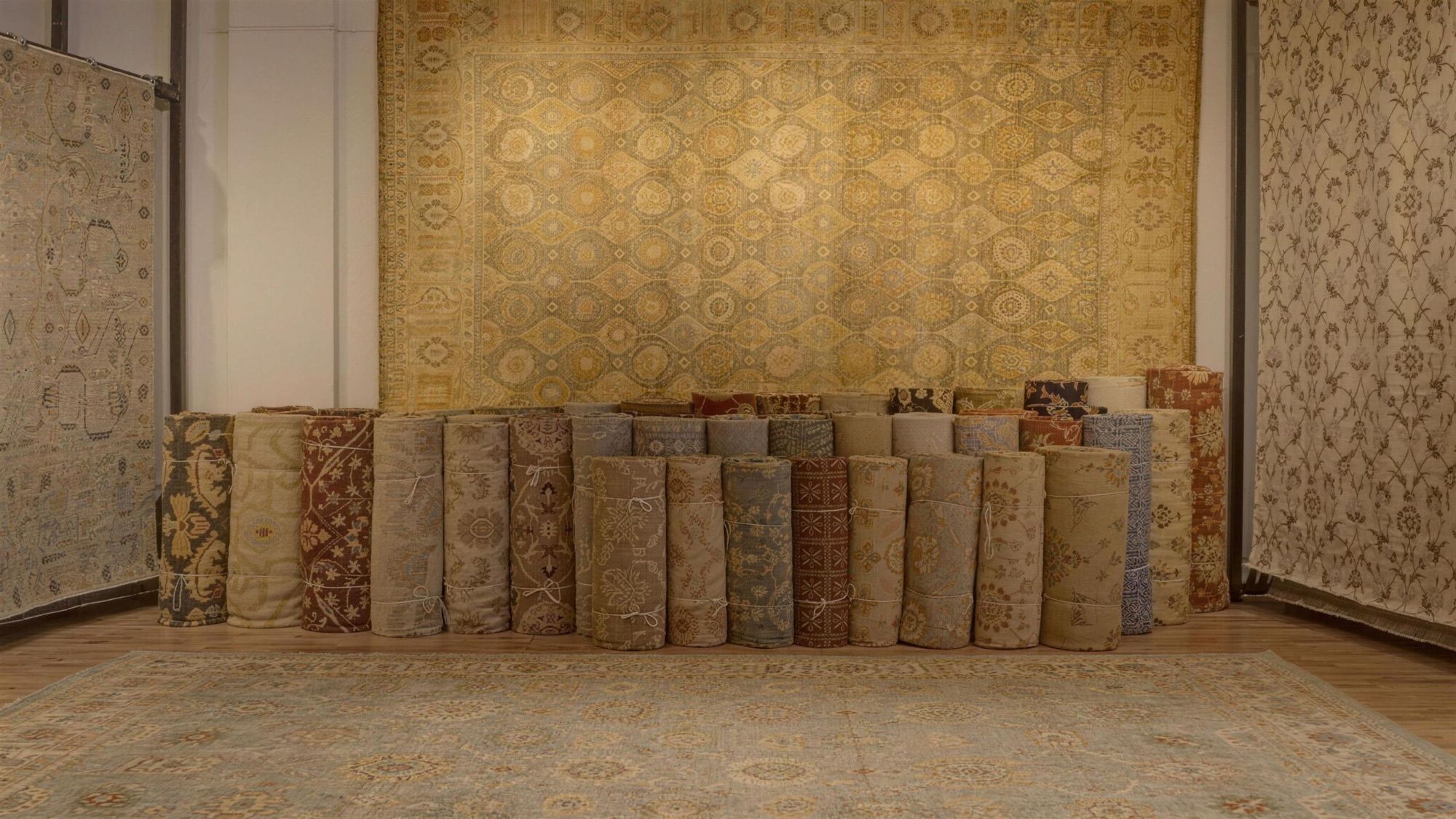
The easiest way to learn the difference is to stand in front of them. Browse our rugs or come to either showroom, and we will walk you through what you are looking at.